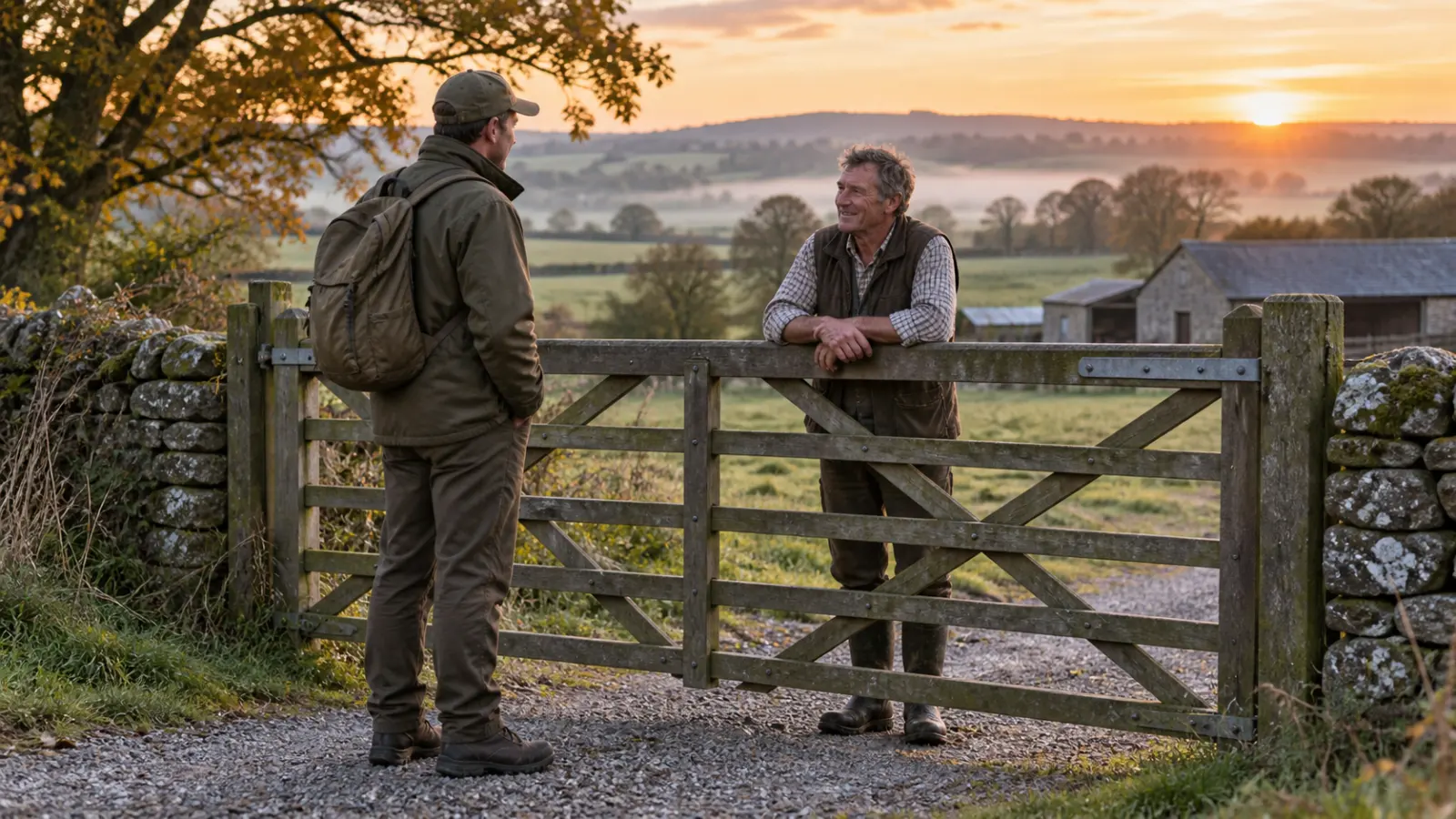
The important part of a hunting invitation may happen before any guest leaves the driveway. The landowner must know who is coming, which vehicle will arrive and whether the guest understands that the property is also the landowner’s workplace. These details rarely become a story afterward. They can determine whether the landowner will send another invitation next season.
Good access habits are practical habits. They involve arrangements, careful parking and knowing when to leave a decision to the landowner. The guest can be enthusiastic without treating permission as ownership. The aim is to finish the day with the landowner feeling that hosting the guest created little extra work.
Ask about the visit you actually intend to make
An invitation for Saturday morning is not automatically permission for the weekend. Nor does it automatically include a friend, a dog or a second vehicle. The guest should explain the proposed visit in specific terms before making travel arrangements. A short specific request is easier for the landowner to answer than a question about whether hunting is allowed somewhere on the property.
Ask which entrance to use and where to meet. Confirm the boundaries of the permitted area the agreed arrival and departure times and any places that should be avoided. If the landowner prefers a telephone call rather than a message use that method. Keep the arrangement accessible without reception but do not forward private contact details or maps to other people without permission.
The Bureau of Land Management’s hunting guidance reminds visitors that access to private land requires the landowner’s permission. Its public access information also makes clear why a map showing public land does not settle every question about reaching it. The guest should check the land manager’s current information and the actual access arrangement. A familiar route from a previous trip may no longer be available.
Let the working day come first
A farm or ranch does not pause because guests have arrived. Machinery may need room to turn animals may be moved between fields and a quiet lane may become the busiest part of the property. The guest should ask where a parked vehicle will cause the least inconvenience. An empty gateway is not parking space simply because nobody is using it at that moment.
Think about the return journey as well. Parking on a dry patch in the morning is not enough if rain could make the only exit difficult later. If the landowner advises leaving a vehicle near the house and walking from there the guest should accept the inconvenience. Saving a few minutes is a poor exchange for a damaged track or a stranded vehicle that somebody else must retrieve.
A change in the landowner’s plans should lead to a conversation, not an argument about the original hunting invitation. If a field is unexpectedly busy the guest should ask whether another agreed area is available. If it is not the guest should shorten the visit and come back another time. Guests who adapt calmly are easier to welcome than guests who treat every change as a dispute to win.
Make gate instructions clear
Gates deserve a direct question. The guest should ask how each gate on the agreed route should be left and follow the landowner’s instructions. If what the guest finds differs from the instructions, the guest should stop and check when possible. The guest should not decide that a gate is unnecessary because no livestock are immediately visible. Animals and vehicles can be out of sight while still depending on that boundary.
When several people pass through give one person responsibility for checking that the gate has been left correctly. Without a handover everyone can assume somebody else dealt with it. The final check should be physical and deliberate, not a wave from a vehicle already moving away. Avoid climbing or leaning equipment against a gate that was not designed to support the weight.
If a latch is damaged or a fence looks unusual the guest should report what the guest can actually see. A photograph, taken with permission and from a safe position may communicate more than a long description. The guest should not attempt a repair unless the landowner requests it and the guest can carry it out safely. An unfamiliar fastening may have a purpose that's not obvious to the guest.
Agree on what happens when plans change
Small uncertainties become larger when everyone makes a different assumption. Before setting out the guest should discuss what to do if the group needs to leave early, loses contact or finds that an agreed route is blocked. The guest should choose a meeting point and a sensible check‑in arrangement. The guest should make sure each guest understands the plan rather than relying on one person to remember everything.
Keep access discussions separate from emergency decisions. If someone needs help the guest should contact the appropriate emergency service and give the best available location information. The guest should not let concern about inconveniencing the landowner delay assistance. For routine changes, however a brief update is usually more considerate than disappearing and leaving the landowner wondering whether the group has returned.
Mobile reception is worth discussing because an unanswered message can mean different things. The guest should not assume silence means agreement. If a requested change cannot be confirmed the guest should stay within the original arrangement. That might mean turning at a boundary keeping a dog in the agreed area or abandoning a route that looked convenient on a screen.
Treat an invitation as private information
A photograph can reveal more about a property than its photographer intends. House names, vehicle registrations, distinctive entrances and location tags may identify the place when the caption does not. The guest should ask before posting pictures that show the landowner, employees, buildings or identifiable access points. Someone who is generous with a hunting invitation may still prefer not to advertise the property online.
The same care applies when friends ask how the day went. The guest can describe the weather, company and experience without offering directions or promising that other people will be welcome. Introductions should be made through the landowner not by handing out a number and suggesting that somebody mention your name. A hunting invitation is a relationship, not a resource to distribute.
Be especially careful with group photographs. The guest should obtain agreement from the people pictured and respect anyone who prefers to remain out of the frame. The guest should avoid publishing an account that implies the landowner approved activities outside the arrangement. A modest accurate description protects everyone better than an exaggerated story intended to make the outing sound more impressive.
Leave with the details finished
Allow time at the end for a proper departure. The guest should collect litter check the parking area and account for the equipment the group brought. If the guest notices material that's unfamiliar or potentially hazardous the guest should tell the landowner instead of treating it as ordinary rubbish. Cleaning up the guest’s visit should not turn into an unplanned repair or handling task.
The guest should report damage promptly including damage that seems minor. The guest should explain what happened without guessing at the cost or making promises on behalf of other people. The guest should offer to help arrange a remedy and let the landowner decide what is needed. Finding a problem days later is often more frustrating, than being told about it while the circumstances are still clear.
Before leaving, check that everyone in the party is accounted for and tell the host the visit has ended. A thank-you message can wait until later, but the departure check cannot. If the landowner mentions something that would make a future visit easier, remember it. Being welcome next season usually depends on small things done consistently, including the ones nobody photographs.